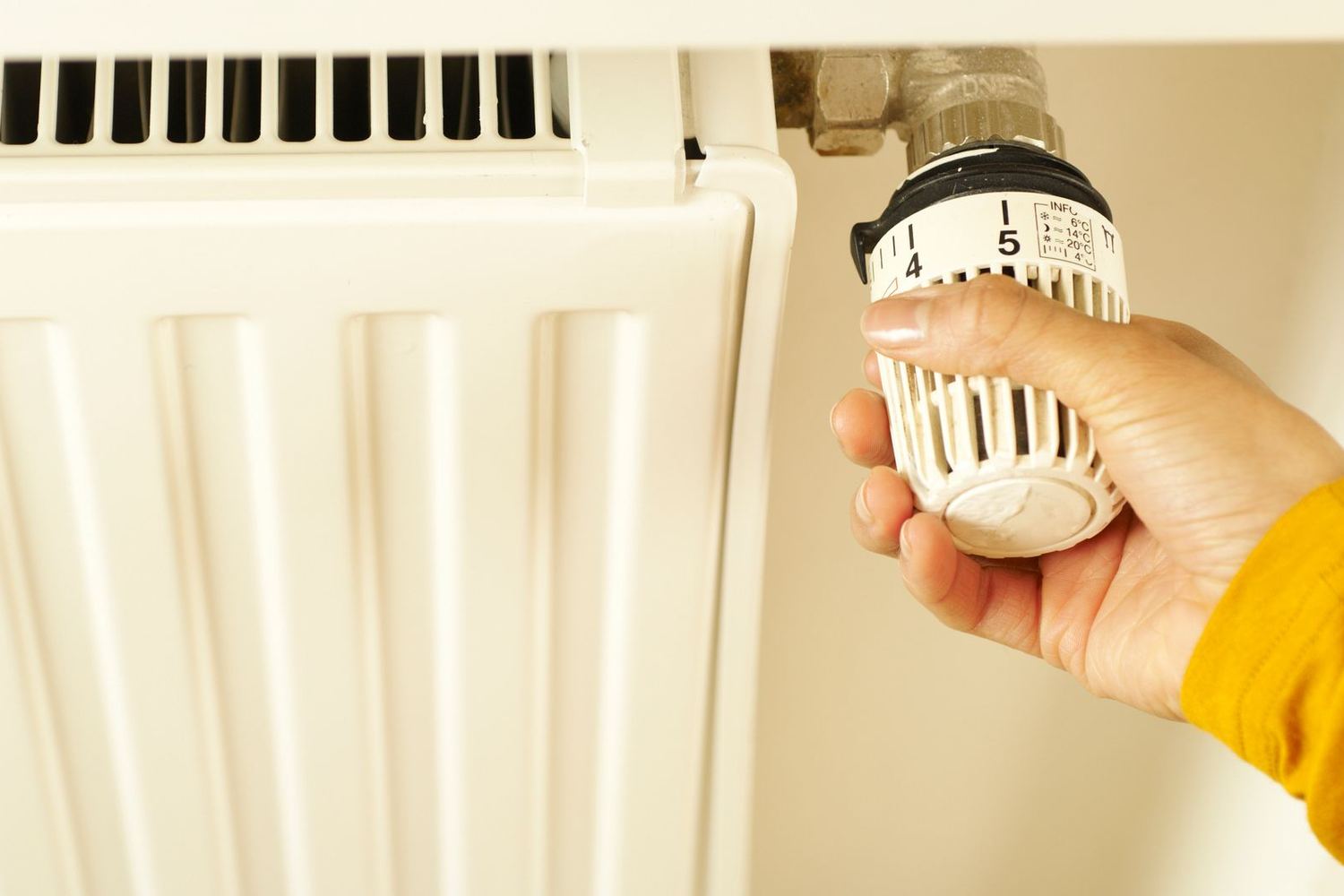
If a radiator is warm at the bottom but cold at the top, there is air trapped inside. Bleeding it takes about five minutes and needs only a radiator key, which costs a pound or two from any hardware shop. Here is how to bleed a radiator safely.
What you need
- A radiator key (or a flat screwdriver for some modern valves)
- An old cloth or towel
- A small container to catch drips
How to bleed a radiator, step by step
- Turn the heating off and let the radiators cool. Hot water can scald.
- Find the bleed valve at the top corner of the radiator. It looks like a small square inside a round fitting.
- Hold the cloth under the valve and fit the key.
- Turn the key a quarter turn anticlockwise. You will hear a hiss as air escapes.
- Close the valve as soon as water starts to come out. Do not open it more than half a turn.
- Check the boiler pressure and top it up to 1 to 1.5 bar if it has dropped.
Which radiator first?
In a house with two floors, start downstairs with the radiator furthest from the boiler, then work back towards it, then do the same upstairs. Turn the heating back on and check every radiator warms evenly.
If the radiator is still cold
A radiator that is cold at the bottom, or several cold radiators, usually means sludge rather than air. Bleeding will not help. A power flush clears it: see our central heating and radiator services. If you need to bleed the same radiator every week, air is getting in somewhere, and an engineer should take a look.
Bleeding radiators lowers the system pressure, so read our guide on boiler pressure dropping if the gauge is low afterwards.